Grandma's Stories Are Going Viral: How Gen Z Is Turning Family Wisdom Into Digital Heirlooms
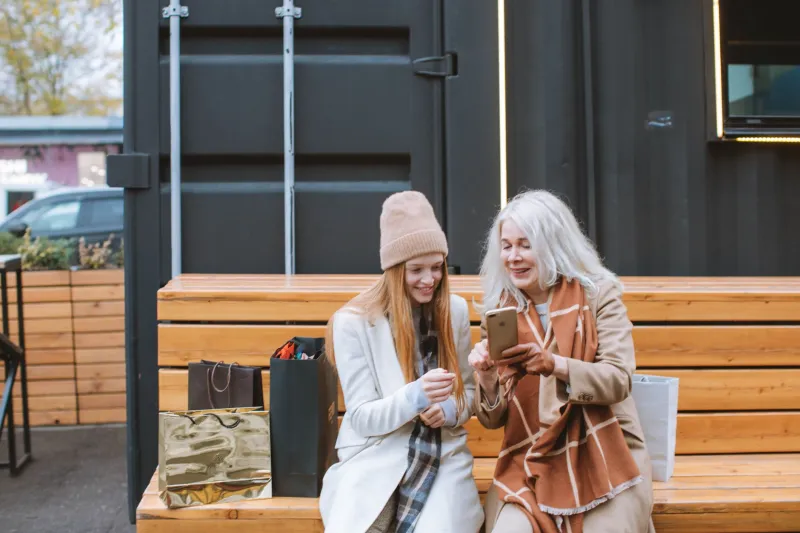
There's a moment Amara Diallo remembers clearly. She was sitting across from her grandmother in a Queens apartment, phone propped against a water glass, recording a story about a healing plant that grows near their family's village in Guinea. Her grandmother had told this story before — to cousins, to neighbors, to anyone who'd sit still long enough. But this time, within 48 hours of Amara posting a short clip on TikTok, over 200,000 people had watched it.
"She didn't understand why strangers were crying in the comments," Amara says, laughing. "But I did. People are starving for this stuff."
Across the United States, young people from immigrant and diaspora communities are quietly doing something remarkable. They're becoming what West African oral traditions call griots — the keepers of history, the bridges between what was and what is — except their stages are digital and their audiences stretch across continents.
More Than a Trend
It would be easy to dismiss this as just another corner of internet culture. But spend time inside these communities and you start to see something with much deeper roots. These creators aren't chasing virality for its own sake. They're responding to a very real fear: that the knowledge carried in the minds and mouths of their elders might not survive the generational handoff happening right now in living rooms all over America.
The urgency is real. Many of these young creators watched grandparents pass away during the pandemic, taking irreplaceable knowledge with them. Others noticed that their parents — caught between survival and assimilation — never had the bandwidth to pass down what they knew. So Gen Z stepped in, doing what their generation does best: building something new out of something old.
Jasmine Tran, a 23-year-old Vietnamese American creator based in Houston, started her podcast Bà Nội Said after her paternal grandmother was diagnosed with dementia. "I realized I had maybe a year, maybe less, to capture her voice. Her recipes, her memories of the war, the way she described her hometown before it changed. I bought a decent mic and just started recording every Sunday."
What began as a personal archive turned into a podcast with tens of thousands of listeners, many of them second- and third-generation Vietnamese Americans who recognized something of their own family silences in Jasmine's conversations.
Discord as Digital Village
Not everything is happening on the big platforms. Some of the most meaningful preservation work is taking place inside Discord servers that most people outside these communities have never heard of.
Take Yoruba House, a Discord server started by 21-year-old Damilola Adeyemi from Atlanta. What started as a casual language-learning space for Nigerian Americans who grew up speaking English at home has grown into a full-blown cultural hub with over 4,000 members. There are channels for proverbs, channels for traditional cooking techniques, channels where elders who were invited in by younger members hold informal Q&A sessions.
"Discord gets a reputation as a gaming thing," Damilola says. "But for us it's more like a town square. It's where we go to remember who we are."
The server runs weekly events including storytelling nights where members share family histories, language lessons led by fluent speakers, and even virtual watch parties for Nollywood films followed by discussions about cultural context. It's community infrastructure, built from scratch by someone who just didn't want to feel disconnected anymore.
The TikTok Griot
If Discord is the village square, TikTok is the performance stage — and some creators have turned it into something genuinely extraordinary.
Maya Osei, a 25-year-old Ghanaian American from the Bronx, has built a following of over half a million people with her series Sankofa Sessions, where she documents everything from Ghanaian funeral traditions to the history of Kente cloth patterns to the medicinal uses of plants her grandmother grows on a small plot in Brooklyn. Each video is layered — entertaining enough to hook a casual scroller, deep enough to satisfy someone who grew up in the culture.
"I think about it like I'm making a documentary that also happens to be a conversation," Maya explains. "The comments are part of the archive. People from Ghana are adding things I didn't know. People from the Caribbean are finding parallels with their own cultures. It becomes this collective memory."
That collaborative dimension is something traditional archiving rarely achieves. When Maya posts about a specific Akan proverb, she might get responses from linguists, from elderly Ghanaians living in London, from second-gen kids in Minnesota who had never heard the saying before. The comment section becomes a living document.
The Tension at the Heart of It
None of this comes without complications. Some creators talk about the weight of being the designated culture-keeper in their families, a role that can feel like pressure as much as pride. Others wrestle with questions about what's sacred and what's shareable — which stories belong to everyone and which ones should stay within the community.
Jasmine Tran puts it plainly: "There are episodes I've recorded and never released because I felt like the story wasn't mine to give away. That's a line you have to draw yourself, and it's different for every family, every culture."
There's also the algorithm problem. Platforms built to reward fast, punchy content don't always make space for the slow, layered work of cultural preservation. Creators talk about fighting to keep their content from getting buried, or having videos flagged because they include traditional music or language that automated systems don't recognize.
But even with those frustrations, the work continues — because the alternative, these creators say, isn't really an option.
Building the Archive That Schools Never Gave Them
Maybe the most striking thing about this movement is what it says about the gaps left by traditional institutions. Many of these young creators grew up in American schools where their family histories were invisible, their languages treated as obstacles rather than assets, their cultures reduced to a single paragraph in a textbook if they appeared at all.
What they're building online is, in part, the education they never received. And they're building it for each other.
"I used to feel embarrassed that I didn't know Yoruba," Damilola says. "Now I'm learning it in public, with thousands of other people who are in the same place. That's not shameful. That's actually kind of beautiful."
Amara Diallo agrees. Her grandmother's healing plant story has now been viewed over a million times across platforms. Botanists have reached out. Diaspora communities from neighboring countries have shared their own versions of the story. A professor in Senegal emailed to say he'd used the clip in a lecture.
"My grandmother asked me once why I was always pointing a phone at her," Amara says. "I told her I was making sure she'd never really be gone. She thought about it for a second and said, 'Okay. Make sure you get my good side.'"
The archive grows. The culture holds. And somewhere right now, another young person from a diaspora community is hitting record.