More Than a Business: How Immigrant Entrepreneurs Are Turning Storefronts Into Community Soul
Walk into Fatima Osei's fabric shop in Minneapolis on a Saturday morning and you might think you've stumbled into a neighborhood reunion. There's laughter spilling out from behind bolts of kente cloth, someone's grandmother is holding court near the register, and the smell of chin-chin from the back room is impossible to ignore. Technically, it's a retail store. But ask anyone who's been coming here for years, and they'll tell you it's something much harder to define.
"I didn't open this place just to sell fabric," says Fatima, who emigrated from Ghana in 2009 and launched her shop a decade later. "I opened it because people needed somewhere to land."
That idea — the business as a place to land — keeps coming up when you talk to immigrant entrepreneurs across the country. And it points to something that economic data alone can't capture: these storefronts, restaurants, barbershops, and markets aren't just engines of commerce. They're the living, breathing connective tissue of American communities.
The Numbers Only Tell Half the Story
Immigrant-owned businesses punch well above their weight in the American economy. According to research from the National Foundation for American Policy, immigrants have founded more than 40 percent of Fortune 500 companies, and at the small business level, immigrant entrepreneurs contribute hundreds of billions of dollars annually to the US economy. Cities like Houston, Chicago, New York, and Los Angeles have entire neighborhoods whose economic vitality is inseparable from immigrant enterprise.
But focusing purely on economic output misses the deeper story. For many of these business owners, wealth-building and community-building aren't separate goals — they're the same project.
Take Roberto Sandoval, who opened a Mexican grocery in a mid-sized Ohio city where the Latinx population had been quietly growing for years without much infrastructure to support it. What started as a place to buy dried chiles and masa harina became, over time, a de facto community center. Roberto started hosting quinceañera planning nights, stocking Spanish-language newspapers, and letting local organizations post flyers on his windows. "People would come in for cilantro and stay for an hour," he laughs. "That's when I knew we were doing something right."
Heritage as a Business Model — and a Gift
One of the most interesting things about these spaces is how deliberately many owners weave their cultural heritage into the business itself. This isn't nostalgia for its own sake. It's an act of preservation — and often, of education.
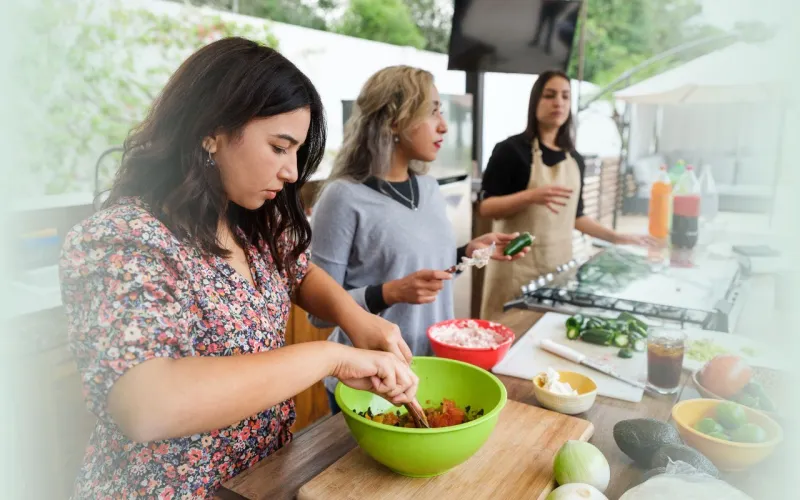
In Atlanta, Priya Nair runs a spice shop and cooking studio that draws customers from across the metro area, many of whom have no South Asian background at all. She offers classes in Indian regional cooking, hosts pop-up dinners celebrating lesser-known cuisines from Kerala and Tamil Nadu, and maintains a small lending library of cookbooks and food memoirs. "Food is how I explain where I come from," she says. "And once people understand that, they understand me. They understand my neighbors. It changes things."
That kind of cultural translation — making heritage accessible and inviting to people outside the community — is something these entrepreneurs do almost instinctively. And in doing so, they become informal ambassadors, shifting perceptions one transaction at a time.
Gathering Places in a Fragmented World
There's a concept urban planners call the "third place" — somewhere that isn't home and isn't work, but where community actually forms. Barbershops, coffee shops, and parks have historically filled this role. In many immigrant communities across America, the local business is that third place, and it serves a dual function: it anchors the diaspora community while also opening its doors to the broader neighborhood.
In Seattle, a Vietnamese-owned bookstore and café has become exactly that kind of crossroads. The owners, a husband-and-wife team who came to the US as refugees in the 1990s, stock Vietnamese literature alongside English translations, host bilingual storytimes for kids, and organize an annual lunar new year block party that draws hundreds of people from across the city. "We never wanted to be just for our community," says the co-owner. "We wanted to be of this city. Both things at the same time."
That balance — honoring roots while planting new ones — is a recurring theme. And it's one of the reasons these businesses often become beloved by people far beyond their original customer base.
The Challenges Are Real — and Often Invisible
None of this comes easy. Immigrant entrepreneurs frequently face barriers that their native-born counterparts don't: language hurdles, limited access to traditional financing, unfamiliarity with US regulatory systems, and in some cases, outright discrimination. Many rely on informal lending networks within their own communities — rotating credit associations known by different names across cultures, from tanda in Mexican communities to hui in Chinese ones — because conventional bank loans simply aren't accessible.
"I went to three banks before I gave up," Fatima recalls. "My community got me started. And that's why my community will always come first."
There's also the emotional labor of being a cultural anchor. These business owners are often called on to help newcomers navigate systems, translate documents, or simply provide a compassionate ear during difficult moments. It's work that doesn't show up on any balance sheet.
What These Businesses Are Really Building
At The Mosaic Hub, we talk a lot about the idea that every culture deserves a place — not just tolerance, but genuine belonging. What immigrant entrepreneurs are doing, often without fanfare, is creating that belonging in physical form. They're building places where heritage is celebrated rather than hidden, where neighbors become regulars and regulars become family.
And increasingly, those spaces are drawing in people from all walks of life, curious about the world beyond their own experience. A kente fabric shop becomes a classroom. A spice market becomes a bridge. A bookstore becomes a gathering point for a whole city.
The American story has always been shaped by people who arrived with something to offer and found ways to share it. These entrepreneurs are writing the latest chapter — one storefront, one community, one Saturday morning at a time.
Know an immigrant-owned business in your city that deserves a spotlight? We'd love to hear about it. Drop us a note or tag us on social — we're always looking for the next story to tell.