Cooking From the Heart: How Everyday Immigrant Home Cooks Are Quietly Revolutionizing the Way America Eats
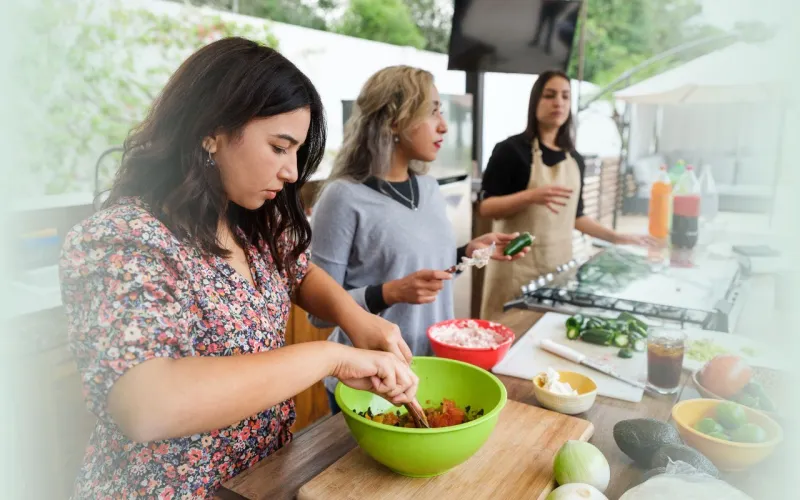
Photo: immigrant woman teaching cooking class in home kitchen, via pirs.bc.ca
There's a woman in Houston named Fatima who films her cooking videos on a phone propped up against a stack of cookbooks. No ring light. No professional editing. Just her hands, her kitchen, and the smell of cardamom and slow-cooked lamb that she wishes you could feel through the screen. She has 400,000 followers on TikTok. And she's never worked in a restaurant a single day in her life.
Fatima is not an anomaly. Across the United States, a quiet but powerful movement is unfolding in home kitchens from Dearborn to Denver, from the Bronx to the Bay Area. Immigrant home cooks — grandmothers, parents, first-gen college students, and weekend market vendors — are stepping into roles as food educators, cultural ambassadors, and surprisingly influential voices in the way Americans understand what food can be.
This isn't a story about the next big celebrity chef. It's a story about something far more interesting.
The Kitchen as Classroom
For generations, the most authentic cooking instruction never happened inside culinary schools. It happened in cramped apartment kitchens, at family gatherings, and over the phone between a daughter in Cleveland and her mother back in Oaxaca. The knowledge was always there. What changed is that the tools to share it got a whole lot more accessible.
Social media — TikTok especially, but also YouTube and Instagram — handed a megaphone to people who had long been cooking extraordinary food without any platform to share it. Suddenly, a Filipina mom in New Jersey demonstrating the patience required for a proper kare-kare could reach viewers in Montana who had never tasted peanut-based stew in their lives. A Vietnamese grandmother in San Jose walking her grandkids through the ritual of making phở from scratch on a Sunday morning could accidentally become a viral sensation.
What makes these creators so compelling isn't just the food itself — it's the context. Unlike a recipe card or even a polished cooking show, these videos carry the weight of lived experience. Viewers aren't just learning technique. They're learning why the technique matters, what memory it carries, what it means to get it right.
Beyond the Restaurant Model
Here's the thing that often gets overlooked in conversations about immigrant food culture in America: restaurants, for all their importance, can only tell part of the story. The economics of running a restaurant — the pressure to adapt menus to local tastes, to keep ticket prices accessible, to survive on thin margins — sometimes means that the food arriving at your table is already a negotiated version of something more complex.
Home cooks don't operate under those constraints. A woman teaching a weekend tamale-making class out of her Chicago apartment doesn't need to worry about whether her mole is too unfamiliar for the average diner. She can go deep. She can insist on the right dried chiles, the right grinding technique, the right amount of time. She can teach, not just feed.
This is exactly what's happening in community spaces across the country. Supper clubs, pop-up cooking workshops, neighborhood cultural centers, and even informal WhatsApp groups are becoming hubs for food education that goes well beyond what you'd find in most cooking classes. These spaces prioritize authenticity over accessibility — and American palates, it turns out, are more than ready for it.
Creating Real Economic Opportunity
There's a practical side to all of this that deserves some attention. For many immigrant home cooks, what started as a passion project or a way to stay connected to heritage has become a genuine income stream — and in some cases, a small business.
Patreon pages, online recipe subscriptions, virtual cooking classes via Zoom, and local in-person workshops are all part of the new ecosystem. Some creators have parlayed their social media followings into cookbook deals. Others have built loyal local customer bases for prepared foods, spice blends, or specialty ingredients that are otherwise hard to find in mainstream grocery stores.
What's especially meaningful is that this economic activity tends to stay rooted in community. It's not venture-backed. It's not corporate. It's a Haitian woman in Miami selling her homemade epis seasoning base to neighbors who've been asking for it for years. It's a Korean-American dad in Los Angeles teaching monthly kimchi-making workshops that sell out every single time. The money circulates locally, and the cultural knowledge circulates with it.
Changing American Tastes, One Recipe at a Time
If you want to understand how dramatically American food culture has shifted in the last decade, just look at what's in people's grocery carts. Gochujang. Tamarind paste. Harissa. Dried shrimp. Fish sauce. Items that would have been niche specialty finds ten years ago are now stocked in mainstream supermarkets because demand has grown — and a big part of that demand was cultivated by home cooks online who made these ingredients feel approachable and exciting rather than foreign and intimidating.
This is cultural education happening in the most organic way possible. Nobody's sitting through a lecture. They're watching someone's abuela explain why you can't rush sofrito, and they're heading to the store that same afternoon.
There's also something quietly radical about who gets to be considered an authority in this space. Traditional food media has a well-documented history of centering whiteness — of treating cuisines from the Global South as trends to be discovered rather than traditions to be respected. The rise of immigrant home cooks as educators flips that script entirely. The person with the most credibility in the room is the person who grew up eating this food, who learned it from someone who learned it from someone else, whose relationship with these flavors is not intellectual but visceral.
Why This Matters Beyond the Plate
Food is never just food. It's identity, memory, belonging, and sometimes resistance. When an Ethiopian woman in Washington, D.C. teaches a sold-out injera and wat class to a room full of curious neighbors, she's doing something that extends well past cooking instruction. She's asserting that her culture's knowledge has value. She's building bridges between communities. She's creating a space where her heritage is centered, celebrated, and shared on her own terms.
At The Mosaic Hub, we believe that's exactly the kind of cultural exchange that makes America richer — not the sanitized, commercialized version of diversity that gets trotted out in marketing campaigns, but the real, messy, delicious, deeply human version that happens when people actually share what matters to them.
The diaspora kitchen isn't a trend. It's a transformation. And the most exciting part? It's being led by people who never asked for a platform — they just had something worth sharing, and the world finally figured out how to listen.