Fire and Wi-Fi: How a New Wave of Black Creators Is Keeping the Art of Storytelling Alive on Your Phone
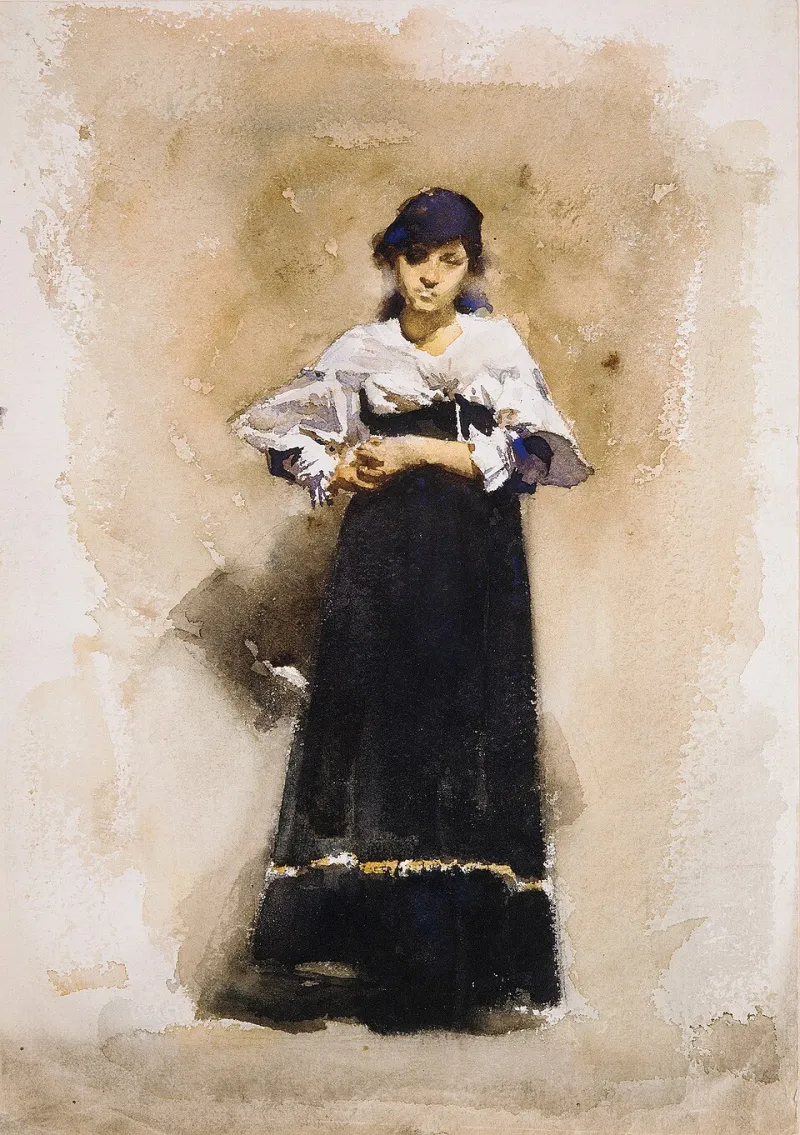
Photo: John Singer Sargent, CC0, via Wikimedia Commons
There's a moment in a lot of TikTok videos — maybe you've felt it — where someone starts talking and you just stop scrolling. Not because of a trending sound or a flashy edit, but because the person on screen is saying something that feels true in a way that reaches past the screen. For a growing number of Black creators across the US, that pull isn't accidental. It's ancestral.
The griot tradition — rooted in West African cultures and carried across the diaspora through generations of oral history, praise songs, and communal memory — never really disappeared. It just kept moving. From the front porch to the barbershop, from the church pulpit to the cipher. And now, apparently, to your For You Page.
Mouth to Microphone to Mobile
Dr. Aisha Lennox, a cultural studies professor at Howard University, puts it plainly: "Black storytelling has always been adaptive. It's survived the Middle Passage, Jim Crow, redlining — it's not going to be stopped by a content format."
That adaptability is exactly what you see when you spend time in the corners of TikTok and Instagram Reels where Black creators are doing something more than chasing virality. They're archiving. They're teaching. They're holding space.
Take creators like the ones building entire series around Black American history that mainstream education glossed over — breaking down the Tulsa Race Massacre, the real story of Juneteenth, or the lesser-known figures of the Civil Rights Movement, all in under three minutes, all with the kind of energy that makes you feel like you're sitting across from someone at a kitchen table rather than watching a lecture. The comments sections on these videos frequently read like community gatherings, with viewers from Atlanta to Seattle dropping family stories, asking follow-up questions, and tagging cousins who "need to see this."
The Algorithm Doesn't Know What It Caught
Here's the tension that a lot of these creators navigate daily: the platforms they use were not built with them in mind. Black creators have repeatedly documented being shadowbanned, demonetized, or penalized for content that gets a free pass when posted by non-Black accounts. The CROWN Act. The words "Black Lives Matter." Even certain AAVE phrases have triggered content filters in ways that feel less like moderation and more like erasure.
And yet. The community building happening in these spaces is undeniable.
Jordan Ellis, a 26-year-old creator based in Atlanta who runs an account dedicated to Black Southern foodways and their African roots, describes the experience as "constantly fighting the current but still swimming." His videos connecting Gullah Geechee cooking traditions to specific West African culinary practices regularly rack up hundreds of thousands of views. More importantly, they generate direct messages from people who grew up eating those dishes without ever knowing the history behind them.
"That's the griot thing," Jordan says. "It's not about performance. It's about transmission. You're passing something down so it doesn't get lost."
Short Form, Long Memory
One of the most compelling things happening in this space is how creators are using the constraints of short-form video to their advantage. The griot tradition was never about length — it was about resonance. A well-placed proverb. A story that lodges itself somewhere behind your ribs. The 60-second format, it turns out, is surprisingly well-suited to that kind of precision.
Nyah Osei, a Ghanaian American creator in Minneapolis, makes videos that weave Akan proverbs into commentary on everything from mental health in the Black community to navigating code-switching at work. She describes her content as "planting seeds in a scroll."
"People will watch a three-second clip of my grandmother saying something in Twi and they'll come back to it," she says. "They'll screenshot the caption. They'll put it in their notes app. That's the oral tradition doing what it always does — finding a way to stick."
Nyah's audience skews young — mostly 18 to 34 — and heavily diaspora. But she gets messages from older African Americans who say her content is helping them reconnect with parts of their heritage that were severed generations ago. That bridge-building across generational and geographic lines is something the griot tradition was always meant to do.
Building the Village in the Comments
Maybe the most underrated aspect of what these creators are doing is the community infrastructure they're quietly constructing. Beyond the videos themselves, many have built Discord servers, Patreon communities, and group chats that function as genuine cultural hubs. These aren't just fan bases — they're spaces where people share resources, process collective grief, celebrate wins, and argue passionately about history and identity in ways that feel genuinely alive.
In a country where Black community spaces have been systematically dismantled — through urban renewal projects, gentrification, and the slow erosion of institutions like the Black-owned press — the significance of that kind of digital community-building is hard to overstate.
"We always find each other," says Jordan. "That's not new. The medium is new. The finding each other part is ancient."
What Gets Carried Forward
The question of what survives — what actually gets transmitted versus what gets swallowed by the content churn — is one these creators think about a lot. TikTok trends have a half-life measured in weeks. Cultural memory is supposed to last generations. How do you hold both of those realities at once?
For many, the answer is intentionality. Treating each video not as content but as a contribution to something larger. Linking out to longer resources. Crediting elders and scholars. Building archives off-platform where the algorithm can't touch them.
Dr. Lennox sees the whole phenomenon as a continuation of something unbroken. "Every generation of Black Americans has had to figure out how to keep the culture alive under conditions that were hostile to it. This generation is doing it with phones and platforms. That's not a diminishment of the tradition. That's the tradition."
The fire, it turns out, doesn't care what it burns in. It just needs someone willing to keep it lit.