When Abuela Goes Viral: The Immigrant Grandmothers Turning Kitchen Magic Into Food Science Gold
Somewhere in a Houston apartment, a 71-year-old Nigerian grandmother named Adaeze is explaining — in perfect, unhurried detail — exactly why her egusi soup tastes nothing like the versions you'll find in American-Nigerian restaurants. She's not just listing ingredients. She's talking about emulsification. She's talking about the Maillard reaction. She's talking about why the specific clay pot her mother used in Enugu changed the pH of the stew in ways that a stainless steel pot simply cannot replicate.
Her granddaughter is filming the whole thing on a phone propped against a stack of cookbooks.
The video has 2.3 million views.
This is the quiet revolution happening in immigrant kitchens across the United States right now — and if you haven't stumbled across it yet on your For You page, you're genuinely missing one of the most joyful, surprising corners of food content on the internet.
Science Was Always in the Soup
Here's the thing that these viral grandmothers are proving, video by video: the women who built the culinary traditions of the Global South were doing food science long before food science had a name. They just didn't call it that.
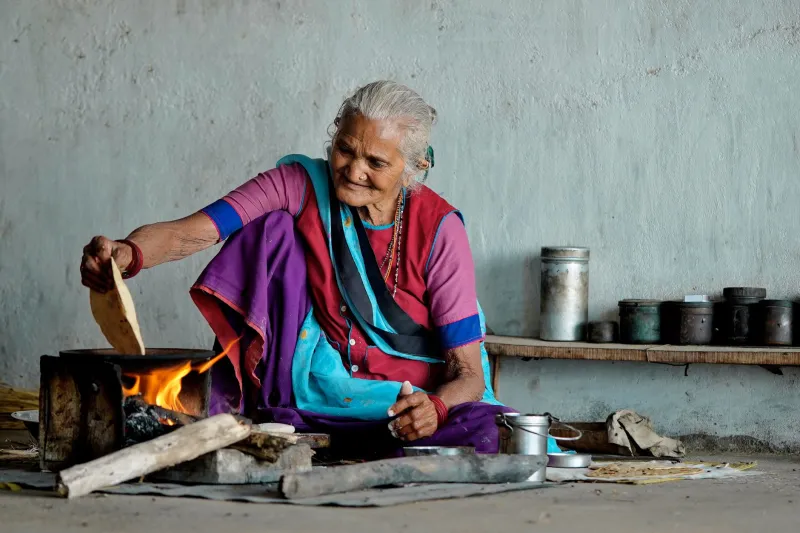
When a Filipina lola explains why she adds a splash of vinegar to her adobo at a very specific moment in the cooking process, she's talking about acid's effect on protein structure. When a Mexican abuela describes the exact technique for nixtamalizing corn — soaking dried kernels in an alkaline solution of water and calcium hydroxide — she's describing a process that nutritionists now recognize as one of the most ingenious food innovations in human history, one that unlocks niacin in corn and quite literally prevented nutrient deficiency diseases across entire civilizations.
They knew. They always knew. They just passed it down through hands and memory instead of textbooks.
What's changing now is the medium — and the audience.
Finding Each Other Across the Feed
For second- and third-generation diaspora kids watching these videos, the experience is something hard to put into words. It's recognition. It's grief and joy wrapped together. It's hearing your grandmother's voice in a stranger's kitchen and suddenly understanding, maybe for the first time, that the food you grew up eating wasn't just comfort — it was centuries of accumulated human intelligence.
Maya, a 26-year-old Bangladeshi-American from Atlanta, describes discovering a TikTok account run by an elderly Bangladeshi woman who breaks down the fermentation science behind traditional shutki — dried fish — as a genuinely emotional experience. "She explained why the smell is so intense using actual chemistry terms, and I burst into tears," Maya says. "My mom always apologized for the smell when my friends came over. And here's this woman explaining it like it's the most sophisticated thing in the world. Because it is."
That emotional resonance is a huge part of why this content travels so far, so fast. It's not just informative. It's validating in a way that diaspora communities rarely get to feel in mainstream American food media, where immigrant cuisines are often either exoticized or flattened into something palatable for a white gaze.
The Curiosity Economy Meets Cultural Depth
But the audience for these videos isn't only diaspora members searching for connection. A significant portion of viewers are simply curious Americans — home cooks, food nerds, culinary students — who stumbled onto this content and got completely hooked.
And honestly? That makes sense. The combination of genuine expertise, warm personality, and the almost mythological quality of "knowledge passed down through generations" is a content formula that cuts through the noise.
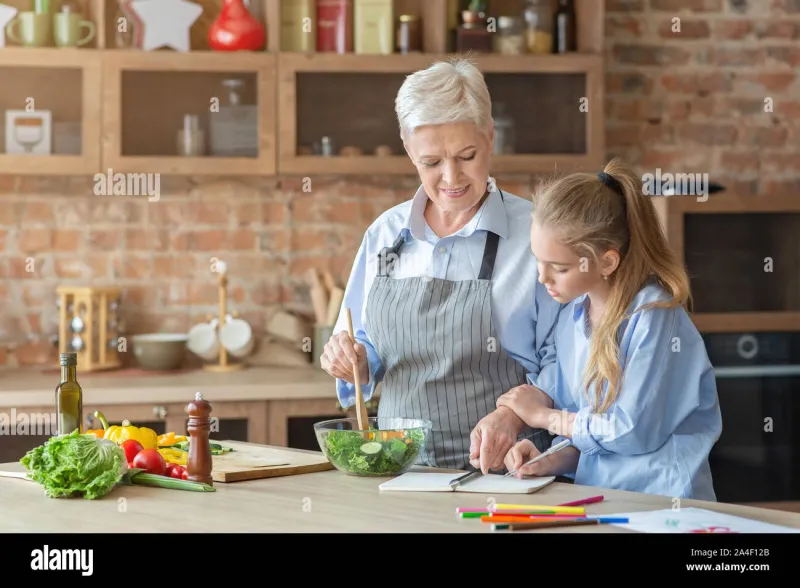
Chef-influencer culture has been dominated for years by a certain type: young, conventionally photogenic, usually classically trained, often performing accessibility while actually gatekeeping technique. These grandmothers are the antidote to all of that. They have nothing to prove and zero interest in performance. They are simply sharing what they know because someone pointed a phone at them and their grandkid asked nicely.
That authenticity is, ironically, the most powerful brand strategy on the platform right now.
More Than Recipes: A Living Archive
What makes this moment genuinely significant — beyond the view counts and the wholesome viral moments — is the archival function these videos are quietly serving.
Food knowledge is among the most fragile kinds of cultural inheritance. It lives in muscle memory, in the nose, in the slight adjustment of heat made instinctively after decades of practice. It does not translate easily to written recipes. Many of these techniques have never been formally documented anywhere. The grandmothers who carry them are not going to be here forever.
Every video is, in a very real sense, a rescue mission.
Cultural organizations and food historians have started paying attention. The Southern Foodways Alliance, which has long documented the culinary traditions of the American South, has noted the explosion of diaspora food content as a significant development in how communities self-archive. Academic food studies programs are beginning to cite TikTok videos in their curricula. Some universities have started reaching out to popular immigrant cooking creators to discuss formal preservation partnerships.
The grandmothers, for their part, seem mostly amused by all the fuss.
The Mosaic in the Kitchen
What The Mosaic Hub has always believed — and what these kitchen scientists are proving every single day — is that culture doesn't need a museum to survive. Sometimes it just needs a phone, decent lighting, and a woman who has been perfecting the same dish for fifty years and is finally, finally, getting the audience she deserved all along.
The spice rack has always had stories to tell. We just needed TikTok to give it a microphone.
If you're not already following this corner of the internet, here's your sign. Search for cooking content in whatever language your grandparents spoke. Look for the accounts where the comments section is full of people typing "this is exactly how my grandmother made it" in six different languages. Find the videos where someone's abuela laughs at her own joke mid-stir and doesn't stop to re-record it.
That's where the real education is happening. And class, delightfully, is always in session.